
You’re already spending money on groceries, gas and online orders. The question isn’t whether to earn cash back; it’s how much you’re leaving on the table by only using one method.
Most people stop at a single rewards credit card and call it a day. But strategic shoppers know the real money comes from stacking multiple cash back methods on the same purchase.
According to a Bankrate survey, 60% of U.S. adults have at least one rewards credit card—yet most aren’t combining those rewards with cashback portals, browser extensions or rebate apps that could double or triple their earnings.
Learning how to stack cash back rewards isn’t about chasing every gimmick. It’s about building a simple, repeatable system that works in the background while you shop. This guide walks you through the six methods that actually move the needle, plus the mistakes that cost you money.
If you’re also looking for the best apps to make money alongside your cashback strategy, we’ll cover that, too.
Key Takeaways
- Stacking cash back means combining multiple rewards methods on a single purchase to maximize your return.
- The most effective stacks use four to six methods: credit cards, portals, extensions, coupon codes, store loyalty and rebate apps.
- Stacking works best on planned purchases—not impulse buys triggered by deals you didn’t need.
- Skip “tricks” that require gift card juggling or sketchy reseller schemes. They rarely pay off and can violate terms.
- Pairing your cashback system with a platform like KashKick adds another income stream without changing how you shop.
What Does It Mean to Stack Cash Back Rewards?
Stacking cash back rewards means combining multiple savings tools on a single transaction so each one pays you back independently.
Here’s a quick example. Say you’re buying $100 worth of pet supplies online. Without stacking, you put it on a 1% cashback card and earn $1. With stacking, you might:
- Click through a cashback portal first (3% back = $3)
- Apply a coupon code from a browser extension (10% off = $10 saved)
- Use a 5% category credit card (5% back = $4.50 on the discounted total)
- Submit your receipt to a rebate app (50 cents back)
Same purchase. Instead of $1, you walked away with about $18 in combined value.
That’s the core idea. Stacking isn’t about finding one magic trick—it’s about building a routine where every purchase passes through several reward channels automatically.
Cash Back Stacking vs. Double Dipping: How They Work Together
You’ll often see the term “double dipping” when it comes to cashback. It typically refers to combining two reward methods on one purchase, like using a cashback portal and a rewards card at the same time.
Stacking builds on that same concept. Instead of two methods, you’re combining four, five or six on a regular basis. Think of double dipping as a great starting point and stacking as the fully built-out system. Both work on the same principle: Every reward channel you add is money you weren’t earning before.
Once you’ve got the basics down, the steps below show you how to expand into a complete stacking routine.
One thing worth keeping in mind: Stacking works on purchases you were already going to make. It’s not about chasing deals that tempt you to spend more than you planned. And the average credit card interest rate is 23.75%—a reminder that no amount of cash back outweighs interest charges from overspending.
The 6 Ways to Stack Cash Back Rewards
Below are the six methods that form the foundation of any solid cashback stack. You don’t need to use all six on every purchase, but knowing your options means you’ll never miss easy money.
1. Start With a Strong Cash Back Credit Card
Your credit card is the foundation of every stack. It’s the only method that applies to nearly every purchase you make, online or in person.
The strongest setups usually involve two cards: a flat-rate card that earns 2% on everything, plus a category card that earns 5% in rotating or bonus categories like groceries, gas or dining. Cards from issuers like Chase, Citi and Capital One all offer competitive options.
One reminder: Pay your balance in full every month. With the average credit card interest rate at 23.75%, APR will quickly wipe out any rewards you earn—and then some. If you’re working on your credit before applying for a rewards card, KashKick has apps that help build credit included in its deals section.
2. Always Click Through a Cash Back Portal
Cashback portals are websites that pay you a percentage back when you click through them before shopping at a partner retailer. They’re the single biggest opportunity most shoppers miss.
Popular options include:
- Rakuten: 3,500+ stores, quarterly payouts via PayPal or check
- TopCashback: Often higher rates than competitors
- BeFrugal: Cash payouts via PayPal, check or direct deposit starting at $10
Rates vary wildly by store and season, so check two or three portals before clicking. A 30-second comparison can mean the difference between 3% and 12% back.
3. Use KashBack and Other Browser Extensions
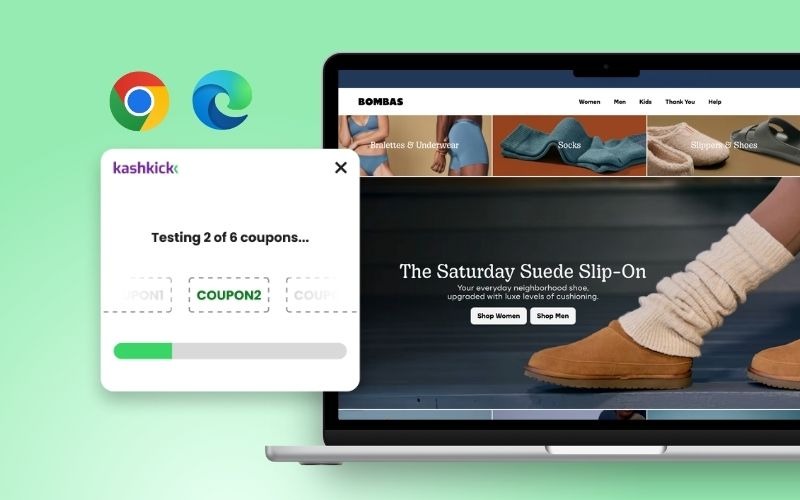
Browser extensions do two jobs at once: They automatically apply coupon codes at checkout and earn you cash back from participating retailers. This is where a lot of stackers double their returns without any extra effort.
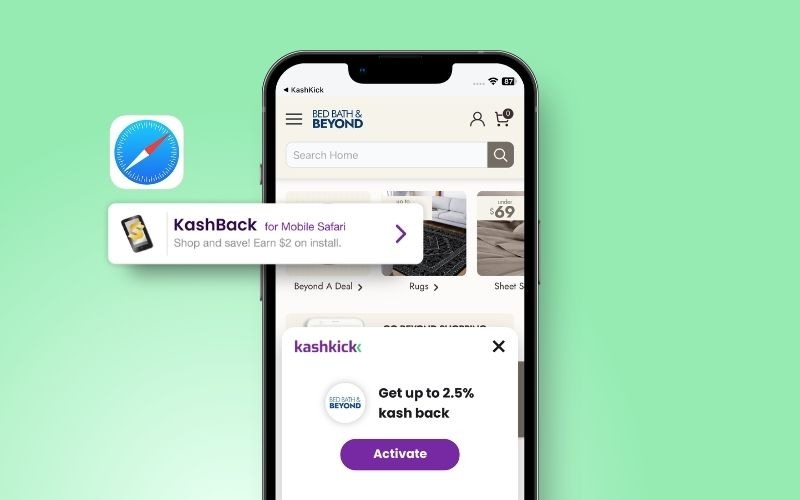
KashBack by KashKick is a standout option for iOS mobile Safari and for Chrome and Edge desktop users. As a shopper, you’ll:
- Earn cash back from participating retailers
- Receive exclusive offers from major brands
- Have coupons automatically applied at checkout
When you install the KashBack extension, you can earn a $2 bonus. Offer amounts are subject to change and may vary.
Honey and Capital One Shopping are two other widely used extensions that scan thousands of code combinations in seconds.
One heads-up on stacking: Applying a coupon code from an extension can sometimes void the cashback from a portal like Rakuten, since portals often classify extension-sourced codes as unaffiliated.
The workaround is simple. Before applying a code at checkout, compare the discount to the cashback rate. If the coupon saves more, use it and skip the portal cashback. If the portal rate is higher, close the code prompt and keep your cashback tracking intact.
For retailers with store-issued codes (sent via email or printed on your receipt), those usually stack cleanly with portal cashback.
4. Use Store Loyalty Programs
Most major retailers have free loyalty programs that earn points on every purchase. These rewards stack directly with everything else because they’re issued by the store itself, not a third party.
A few worth signing up for:
- Target Circle (1% back plus exclusive discounts)
- Kohl’s Rewards (5% back in Kohl’s Cash)
- Sephora Beauty Insider (points toward free products or $10 off rewards)
- Walgreens myWalgreens (1% Walgreens Cash on most purchases, 5% on Walgreens-branded products)
- CVS ExtraCare (2% back in ExtraBucks plus targeted coupons)
Sign up once, link your phone number or email, and the rewards accumulate automatically. Zero ongoing effort.
5. Submit Receipts to Rebate Apps
Rebate apps pay you for groceries, household items and everyday purchases by scanning your receipts. They’re the easiest way to add a final layer of cash back to in-store shopping.
Some of the most popular options include:
- Ibotta: Cash back on groceries, in-store and online; $20 cashout minimum
- Fetch Rewards: Points for any receipt; redeem for gift cards
- Checkout 51: Weekly rotating offers on grocery items
These apps work best when you spend a few seconds before shopping to add offers to your account. Otherwise you’re scanning receipts for items you bought without any rebate attached.
6. Layer on a Rewards Platform for Purchases You Can’t Stack
Some purchases don’t pass through portals or extensions. Think: Services, subscriptions or deals you discover by chance. A rewards platform fills that gap and adds earning power outside of shopping entirely.
KashKick is one of the most flexible options because it combines several earning methods in one place. You can earn cash back on online purchases from partner retailers like Walmart, Home Depot and DoorDash through the Shopping tab. You can also earn through paid surveys, mobile games and deals on services you might already be considering, like streaming subscriptions or grocery delivery.
Once you reach $10, you can cash out through PayPal, Venmo, gift cards or charity donations. Payouts process in one to three business days—faster than most cashback portals, which often take weeks or pay out quarterly.
The reason this method matters: Even on weeks when you’re not making purchases, you’re still earning. That consistency turns occasional cashback wins into a steady side income. See all the ways to earn on KashKick.
Sign up for KashKick free and start earning cash back plus rewards for surveys, games and more.
How to Build a Stack That Actually Works
Knowing the methods is one thing. Putting them together into a system you’ll actually use is another. Here’s how to make stacking automatic.
- Pick your tools and stop researching. The biggest mistake new stackers make is constantly hunting for the “best” portal or card. Choose one or two of each method, set them up once, and start using them. Optimization comes later.
- Set up shortcuts. Bookmark your favorite cashback portals. Install your browser extensions. Save loyalty barcodes to your phone’s wallet app. Friction is the enemy of consistency.
- Build a pre-purchase routine. Before any online purchase, run through a quick mental checklist: portal click, extension active, right credit card, store loyalty signed in. After a few weeks it becomes automatic.
- Audit quarterly. Every three months, check what you’ve earned. If a tool isn’t producing meaningful returns, drop it. If a new card or app could add value, swap it in.
- Don’t let deals drive spending. This is the single most important rule. A 10% cashback offer on something you didn’t need is still a 90% loss. Stacking only works on purchases you’d make anyway.
What to Avoid: Stacking Mistakes That Cost You Money
Cashback stacking gets a lot of advice that ranges from outdated to outright bad. Here’s what to skip.
- Don’t carry a credit card balance. No stack overcomes 20%+ interest. If you can’t pay in full each month, focus on debt before optimizing rewards.
- Don’t buy gift cards in elaborate schemes. Some forums push complicated routines—buy a discounted gift card, use it to buy another gift card, redeem at a third store. The savings are usually minimal and the risk of losing money on unused balances is real.
- Skip portals with sketchy payouts. If a cashback site has consistent complaints about missing payments or denied claims on platforms like Trustpilot or Reddit’s beermoney community, move on. There are too many legit options to bother with bad ones.
- Don’t stack on subscriptions you’ll forget. Signing up for a streaming service to earn $20 cashback only pays off if you actually cancel before the trial ends. Set calendar reminders.
- Avoid extensions with poor privacy practices. Some browser extensions collect more data than they should. Stick to well-reviewed options from established companies.
Real-World Stacking Example
Here’s how a real stack works on a single purchase. Say you’re buying $200 worth of running gear from a major retailer.
- You click through Rakuten first → 6% back ($12)
- You apply a store-issued coupon at checkout → $30 saved
- You pay with a 2% flat-rate cashback card → $3.40 back on the $170 total
- You earned 170 store loyalty points worth roughly $1.70 in future credit
- A rebate app offered 50 cents on athletic socks you added to the order
Total return: About $47 in combined cash back, discounts and credits on a single $200 purchase. Without stacking, you’d have walked away with $4 in card rewards.
That’s the difference a system makes—and it scales every time you shop.
Maximize Your Cash Back With KashKick
Cashback stacking is one of the highest-ROI habits you can build. Once your system is in place, you’re earning money on purchases you were already making, plus picking up rewards from surveys, games and deals on the side.
KashKick fits naturally into a stacking strategy because it adds earning power outside of just shopping. You’re not waiting for the next purchase to earn—you can pick up extra cash anytime you have a few free minutes. If you want to see how other members put it to work, read KashKick reviews from real members.
Start small. Sign up, complete your profile survey for $1, and explore what’s available. The members who get the most out of platforms like this are the ones who build it into their routine, not the ones chasing one big payday.
Sign up for KashKick today and start earning real cash on purchases, surveys and games.
FAQs: How to Stack Cash Back Rewards
What is the best way to stack cash back rewards?
The best stack combines a strong cashback credit card, a portal click before any online purchase, a coupon-code browser extension, store loyalty programs and a rewards platform like KashKick. Set up these tools once and they work in the background on every transaction. KashKick stands out because it adds income from surveys and games, not just shopping.
Can you really double or triple your cash back?
Yes, but only on purchases that pass through multiple reward channels. A typical online purchase using a portal, extension, rewards card and loyalty program can easily return four to ten times what a single cashback card would earn. The key is consistency, not chasing every deal.
Is stacking cash back rewards worth the effort?
For most people, yes. The setup takes an hour or two, and after that the system runs on autopilot. Even modest stackers can earn hundreds of dollars a year on purchases they were already making. KashKick adds another stream because you earn from surveys and games even on weeks you don’t shop.
What’s the difference between cash back stacking and double dipping?
Double dipping usually means combining two reward methods on one purchase—a great entry point for new savers. Stacking is the broader system that layers four to six methods consistently across your spending. Most people start with double dipping and grow into a full stack over time.
Do cash back portals and browser extensions conflict?
Sometimes. Applying a coupon code from an extension can void the cashback from a portal like Rakuten, since portals often classify extension-sourced codes as unaffiliated. The fix is to compare before applying: if the coupon saves more than the portal cashback rate, use the code. If the portal rate is higher, skip the code and keep your cashback tracking intact. Store-issued codes sent by email usually stack cleanly with portals.